
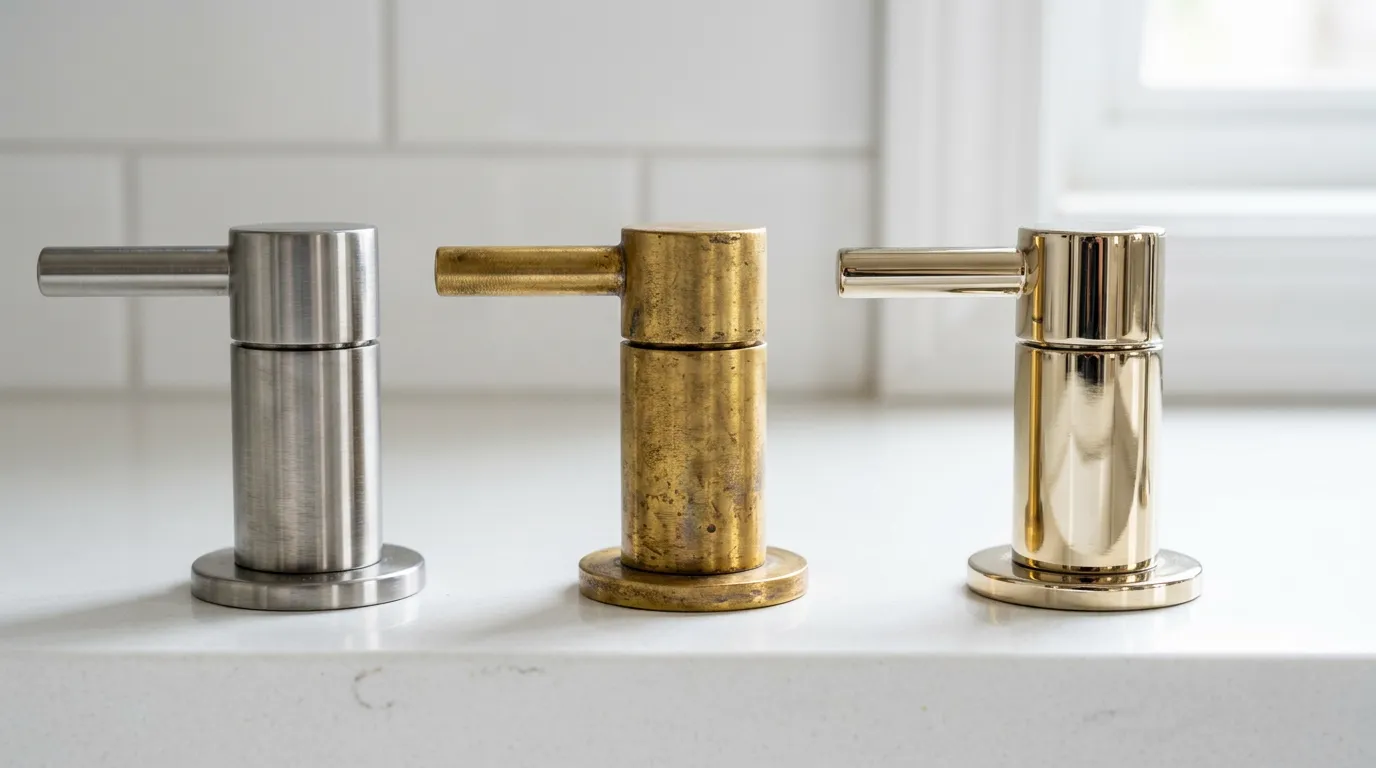
Stainless Steel Faucets
Stainless steel is increasingly popular for kitchen and bathroom faucets due to its corrosion resistance and durability. It withstands moisture without rusting and is easy to clean. Higher-grade stainless steel (304 or 316) offers superior longevity. While more expensive than some alternatives, the reduced maintenance and extended lifespan make it a value proposition for commercial and high-end residential projects.
Brass & Nickel-Plated Options
Traditional brass faucets offer aesthetic appeal and solid performance. Nickel plating adds shine and corrosion resistance. These materials work well for both kitchen and bathroom applications. Maintenance is straightforward—regular cleaning prevents mineral buildup. Costs are moderate, making brass a balanced choice for many buyers.
Ceramic & Cartridge Technology
Ceramic disc cartridges have become the standard for drip-free operation. Ceramic components resist wear and sediment damage better than older rubber-based cartridges. This technology extends the functional lifespan of faucets and reduces maintenance complaints. When sourcing, verify that any faucet uses ceramic cartridge valves for reliability.
Material Selection for Your Market
Consider your customer base and intended use. Stainless steel suits premium residential and commercial markets. Brass works well for mid-range residential. Budget-conscious commercial buyers may prefer nickel-plated options. Environmental conditions also matter—coastal regions benefit from stainless steel due to salt spray resistance.